Guided vs Blank Journal: Which Fits You?
Compare guided and blank journals by structure, freedom, repetition, and purpose so you can choose support without turning writing into a chore each day.
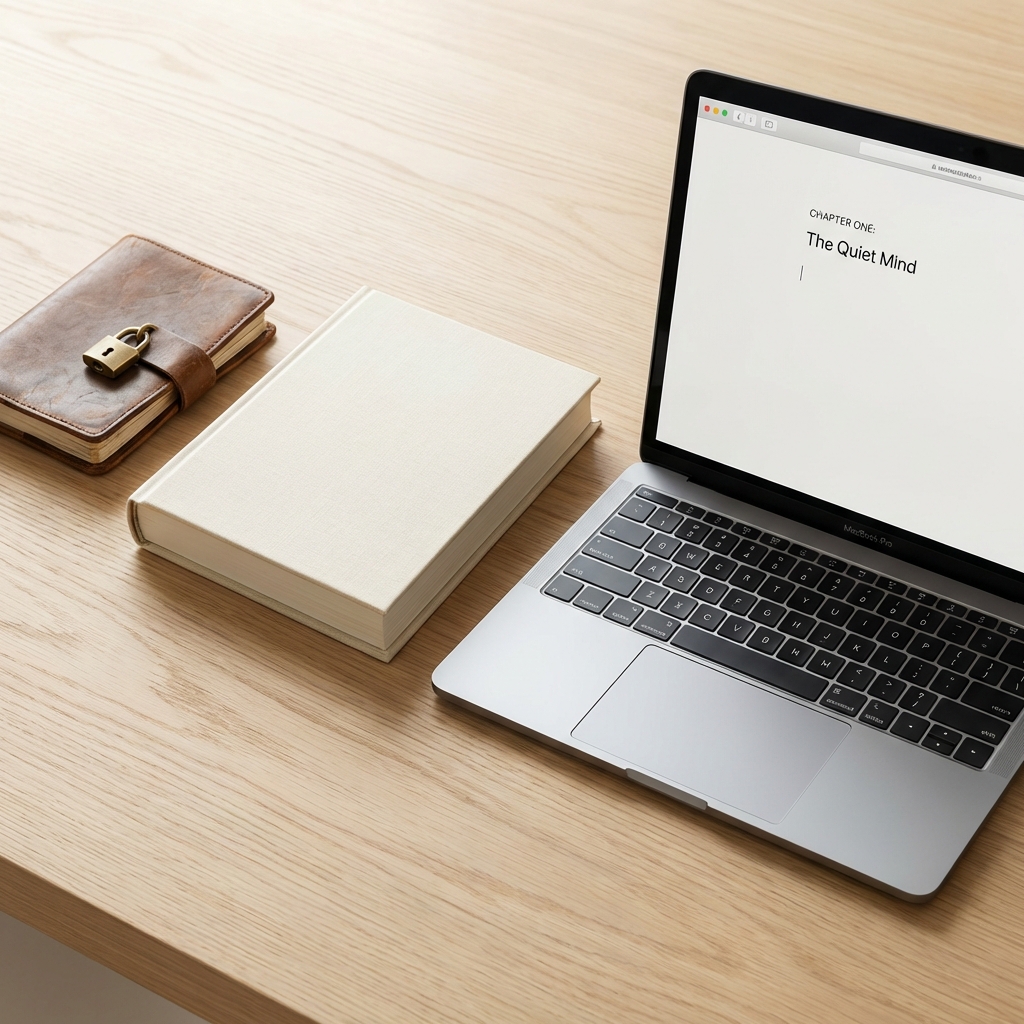
A guided journal gives you prompts, sections, or a repeated structure. A blank journal gives you space to decide what each entry needs. Neither is universally better: guided pages reduce the question of where to begin, while blank pages leave more room for a life that does not follow a template.
Guided vs blank journal at a glance
| Question | Guided journal | Blank journal |
|---|---|---|
| How do you begin? | Respond to a prompt | Choose the subject yourself |
| How much structure? | Repeated questions or sections | Different for every entry |
| Main strength | Less starting friction | More freedom and context |
| Common difficulty | Prompts may stop fitting | The page may feel too open |
Choose a guided journal when the question helps
A prompt can narrow a large inner world into one approachable doorway. Guided journals may work well when you want a repeated check-in, a record of one project, or a small ritual that does not require choosing a topic every time.
The prompt should support attention, not tell you what you are supposed to feel. If a question does not fit the day, you can skip it or answer the question you actually need.
Choose a blank journal when the context leads
A blank journal can hold a long reflection one day, three facts the next, and a photograph with two lines after that. It works well when the subject changes or when the value lies in discovering the question while you write.
Freedom can also become hesitation. Keep a small fallback such as “What happened, what stayed with me, and what do I need next?” You still have a blank journal even when you borrow a little structure.
Prompts and free writing can share one page
You do not need to choose a permanent camp. Use a prompt as the first line, then leave it behind when another thread appears. Or free-write first and end by answering one repeated question.
A brain-dump journal can help when thoughts arrive faster than structure. A daily check-in offers a smaller shape when time or attention is limited.
Match the format to the purpose
- Use guided pages for a repeated review, specific learning process, or gentle starting ritual.
- Use blank pages for open reflection, complex life chapters, and writing that changes shape.
- Use both when a prompt helps you enter but freedom helps you continue.
If you want a larger map of possible formats, compare the types of personal journals by the job each one does.
Try each one before deciding
For three entries, answer the same short questions. For the next three, begin with only the date. Notice which format helps you return, which preserves useful context, and which leaves you feeling observed by the page.
The right journal is not the one that produces the most words. It is the one that gives your real life enough shape without asking it to become simpler than it is.
Your first quiet page
Keep writing, without turning your life into content.
Inpages.me is a calm digital journal for thoughts, photographs, and details you want to return to—without an audience or an endless feed.
Choose and pay for a membership before writing your first entry.