How to write a personal philosophy from your journal
Write a personal philosophy from things you have lived and learned. Use a simple template to turn journal reflections into beliefs you can revisit and revise.
Essays on memory, privacy, and the art of documenting a life lived.
Write a personal philosophy from things you have lived and learned. Use a simple template to turn journal reflections into beliefs you can revisit and revise.
Explore 20 examples of personal beliefs about work, relationships, learning, and daily life, with practical ways to turn a borrowed idea into words of your own.
Understand beliefs, values, principles, and goals through everyday examples, then choose the kind of sentence you want to keep in your own personal journal.
Find a useful thread across old journal entries, test what it means, and write one personal principle while keeping the experiences and exceptions beside it.
Save the things you believe as simple cards in Inpages.me. Learn how to add a belief, link your writing, read it on Home, and change it when your view changes.
Self-regulation is not about ignoring a feeling. It is a way to notice what a changing state makes easier or harder to see, then choose what comes next.
Putting a feeling into words can make a crowded moment easier to notice. Learn how to name a state without treating that label as a verdict or diagnosis.
Emotion regulation does not mean forcing a feeling away. It means making enough room to choose a response you can still respect when the moment has passed.
Strong emotions can change what gets your attention and which answer feels obvious. Learn how to make room for a feeling without letting one state tell the whole story.
Success deserves to be enjoyed. It can also change confidence and urgency. Here is a reflective way to stay grateful, curious, and grounded without making yourself smaller.
Excitement can be wonderful and still change urgency, confidence, and risk. Keep the joy while leaving enough room to look carefully before making a big commitment.
When everything feels important at once, you may not need to solve everything. Start by making the moment smaller and choosing one next thing you can actually do.
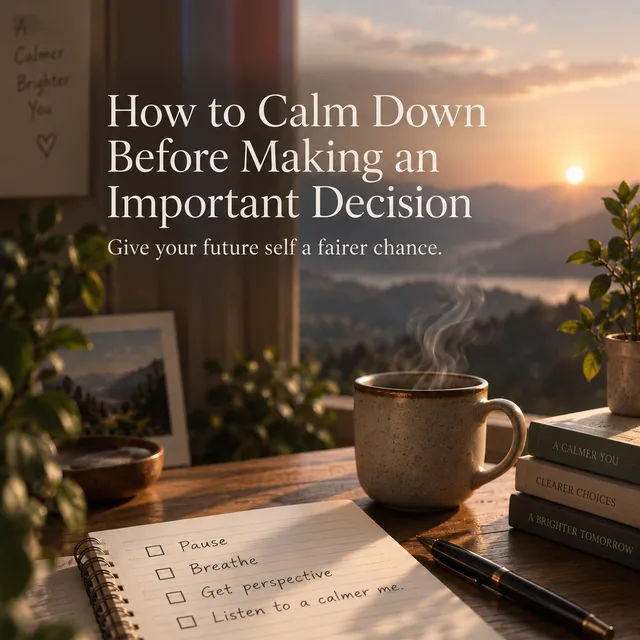
A strong feeling can make a choice feel more urgent than it is. Create distance between the state, the impulse, and an important decision without dismissing emotion.
You are not the same thinker in every state. Leave a useful note while perspective is available, then return to it when the next hard or exciting moment arrives.
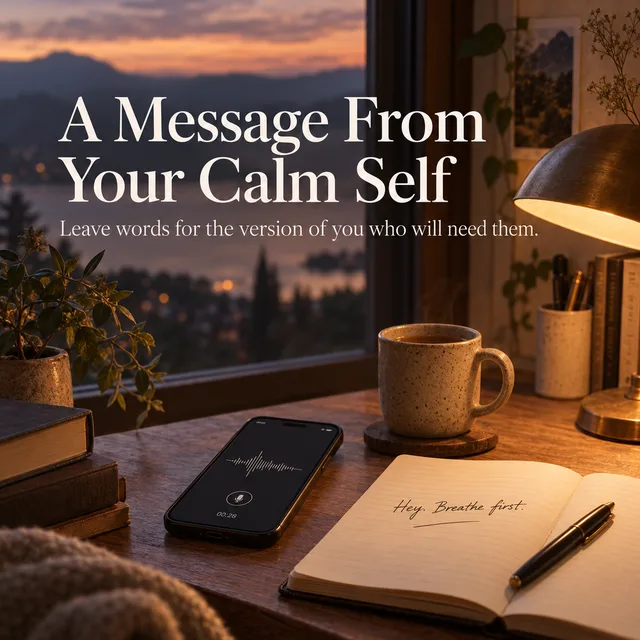
Write or record a message for a moment when anger, fear, success, loneliness, or exhaustion changes what you can see. Keep it specific, kind, and recognisably yours.