20 examples of personal beliefs to help you write your own
Explore 20 examples of personal beliefs about work, relationships, learning, and daily life, with practical ways to turn a borrowed idea into words of your own.
A personal belief is something you currently hold to be true. In everyday reflection, it might be a sentence about the kind of work you respect, the care you want to give relationships, or what you have learned about your own attention.
For example:
I do not want the people close to me to receive only the time left after everything else.
That statement is specific enough to question and apply. It also leaves the writer room to explain what it means in their circumstances.
The examples below are original writing prompts, not quotations or universal rules. Choose a line only if you can give it reasons of your own.
Twenty sentences you can respond to
A full calendar can still leave out the things I care about. What has been missing from a week that looked productive?
A careful answer is sometimes worth the time it takes to form. When have you been glad that you waited before replying?
Being useful to someone does not require accepting every request. Which kinds of help can you offer willingly and sustain?
Work I respect includes the way I treat people while doing it. What would make a good result feel less worthwhile to you?
Learning something unfamiliar includes a period of being visibly inexperienced. What are you willing to be a beginner at?
An ordinary day can deserve remembering before anything remarkable happens. Which small scene from this week would you like to keep?
Changing a plan can be an honest response to new information. What would justify changing a commitment you have already made?
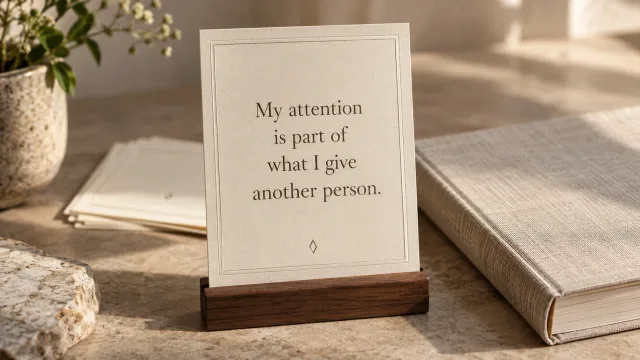
My attention is part of what I give another person. When did you last feel that someone was fully present with you?
A disagreement can leave room for curiosity about how someone reached their view. Which question would help you understand a disagreement better?
Some ambitions are worth pursuing slowly enough to keep the rest of my life with me. What pace would let a particular ambition coexist with your other commitments?
A useful apology names what I did and what I will try to do differently. What would make an apology feel clear to you?
Keeping a promise to myself also takes practical room in the day. Which intention needs time or help before it can become a commitment?
An old version of me deserves to be understood in the circumstances they had. What context is missing when you judge a past choice?
Enjoying something does not always require getting better at it. Which activity would you like to keep without a performance target?
I can take a concern seriously without deciding its answer immediately. What can remain an open question for now?
A relationship needs room for both care and honest limits. Which limit would let you participate more willingly?
The reasons behind a decision are worth recording before I know its outcome. Which current choice would you like your future self to understand?
I want success to leave room for a life I still recognize. What would you want to preserve if an ambition went well?
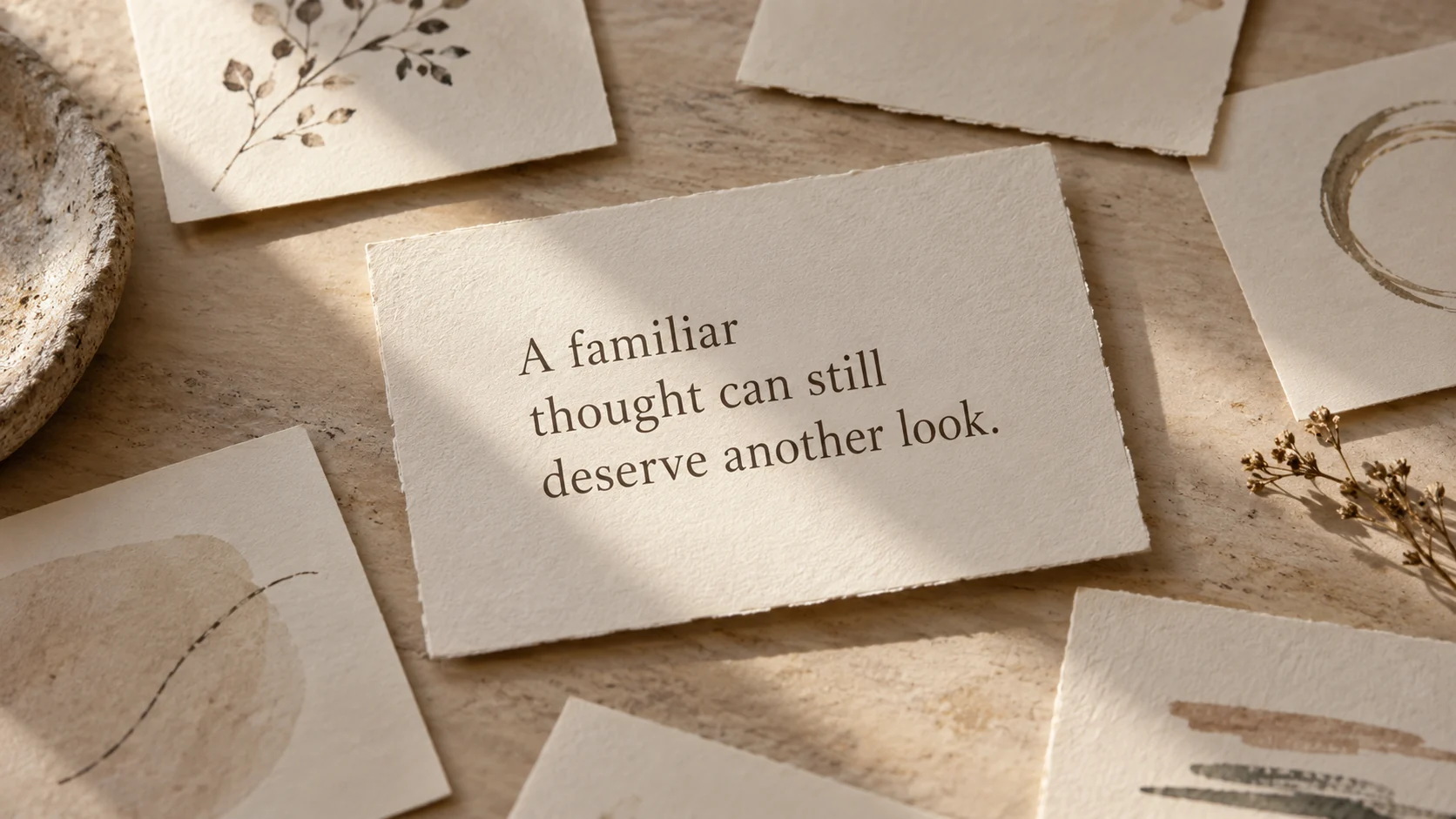
A familiar thought can still deserve another look. Which sentence have you repeated without recently considering its meaning?
I can keep what an experience taught me while changing the words I use for it. Which old lesson needs a more precise version?
You do not need to agree with the whole list. Disagreeing with an example can be a useful way to begin a sentence of your own.
Make one example sound like your life
Take number eight: “My attention is part of what I give another person.”
Here is an invented situation. You spend an afternoon with a friend while checking messages about a project. In the evening, you realize you remember the messages more clearly than the conversation.
You might write:
When I make time for a friend, I want to be available for the conversation I came to have.
This version describes what the writer means by attention. It also suggests an ordinary choice: what to do with the phone during the next visit.
Your version might make room for an urgent family call, caring responsibilities, or a job that requires you to be reachable. Those details can make the statement more honest.
Turn an appealing line into a considered belief
Before saving a sentence, complete these three lines in a journal:
I connect this with the time when…
It would help me notice…
I would make an exception when…
If you cannot connect a line with anything you have lived, keep it as a question or a quotation you are considering. You can decide later whether you agree with it.
For example, “A careful answer is sometimes worth the time it takes to form” might become “Before replying to a request that changes my week, I want to look at my existing commitments.”
The second sentence is a principle for action. Both forms can be useful. The distinction is explained in beliefs, values, and principles.
Leave out sentences that ask too much
Watch for statements that depend on always being calm, generous, productive, or certain. They can leave little room for the circumstances in which you actually make choices.
“I always put other people first” may hide a question about whose needs you can meet and at what cost. “I want to give help that I can offer with care” gives you something more specific to consider.
You can also keep a difficult belief under examination. Saving a statement does not make it a fact, and you do not owe a sentence permanent agreement.
Start a collection with one sentence
Choose one example, rewrite it in language you would use, and add the experience that explains it to your journal.
The guide to writing a personal philosophy shows how a few considered sentences can fit together. If you want a place to revisit the short versions alongside your writing, Beliefs in Inpages.me keeps each sentence on its own card.
Continue reading
Write the version that sounds like your life.
Use your own experiences to turn one example into a sentence you can explain.