Paper vs Digital Journaling: Which Is Right for You?
Compare paper and digital journaling across focus, privacy, portability, search, and memory to find the format that fits your daily life and priorities.
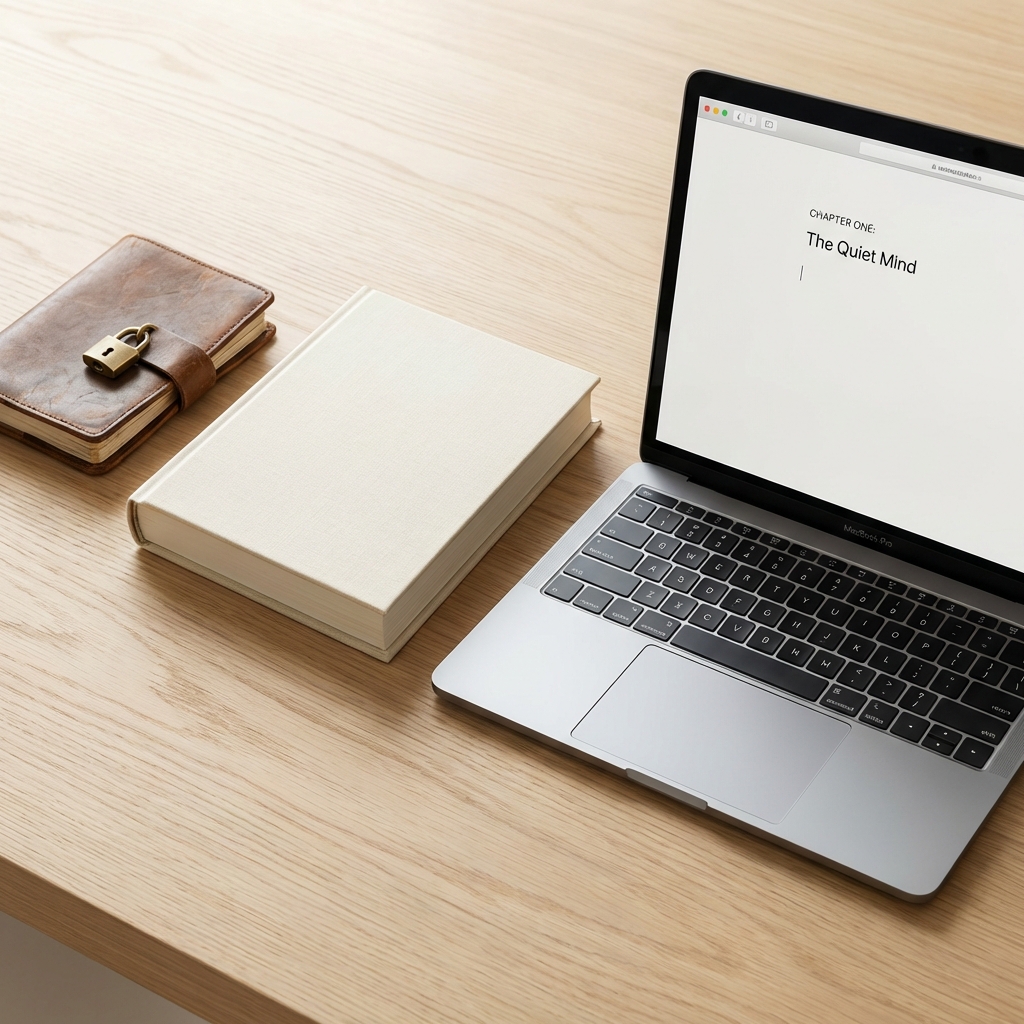
Paper vs digital journaling is not a choice between an authentic practice and a convenient imitation. Both can preserve a meaningful life. Paper offers touch, physical presence, and a naturally bounded page. Digital journals offer portability, search, flexible length, and tools that make a growing archive easier to revisit. The right format is the one in which you can write honestly and return later.
What paper does especially well
A paper notebook gives writing a physical place. The pace of handwriting can feel deliberate, and the finished pages make time visible. There are no tabs to open and no battery to charge. You can draw in the margin, keep a ticket, or recognize a past mood in the pressure of the pen.
Paper may fit you when:
- the tactile ritual helps you slow down;
- you want a break from screens;
- handwriting feels more natural than typing;
- you enjoy a fixed object that ages with you.
Its limits are physical too. A notebook can be lost, damaged, discovered by someone nearby, or left at home when you want to write.
What digital journaling does especially well
A digital journal can travel across ordinary contexts: a short note on a commute, a longer entry at a desk, or a memory revisited years later. Typing may make it easier to follow a fast-moving thought. Search, dates, photos, and links can help separate moments become an accessible archive.
Digital may fit you when:
- you want your journal available wherever you already carry a device;
- you write faster or more comfortably with a keyboard;
- you want to search and revisit a large history;
- you include photographs or other digital context.
Digital privacy requires closer attention. An account password and client-side encryption solve different problems. Our guide to why private journals need end-to-end encryption explains the distinction and its trade-offs.
Compare the risks you actually live with
Privacy is not abstract. For a paper journal, ask who can enter the room where it is kept and what would happen if the notebook disappeared. For a digital journal, ask how entries are stored, what the service can read, how you recover access, and which devices or browser extensions you trust.
No format removes every risk. Choose protections that match your circumstances, and understand what they do not protect against.
A hybrid practice is still one practice
You do not have to pledge loyalty to one medium. You might keep morning pages on paper and preserve important memories digitally. You might use a pocket notebook while traveling, then add context to a digital archive after returning. You might write difficult first drafts by hand and keep only the entries you want to revisit.
If you use both, decide what each is for. A simple boundary prevents fragments from feeling lost: paper for immediate thinking, digital for lasting memories; or paper at home, digital everywhere else.
Test the experience, not the idea
Try each format for one week with the same small prompt: What do I want to remember about today? Then compare. Where did you write more freely? Which format was easier to begin? Which entries do you want to reread?
The best journal is not the one with the longest feature list or the most romantic image. It is the place that helps your life remain visible to you. Read more about why digital journaling still matters, or try a private digital notebook.
Your first quiet page
Keep writing, without turning your life into content.
Inpages.me is a calm digital journal for thoughts, photographs, and details you want to return to—without an audience or an endless feed.
Choose and pay for a membership before writing your first entry.