The Things We Forget About Ourselves
A journal can preserve more than what happened. It can keep what you once understood, so a future version of you does not have to rediscover every lesson from zero.
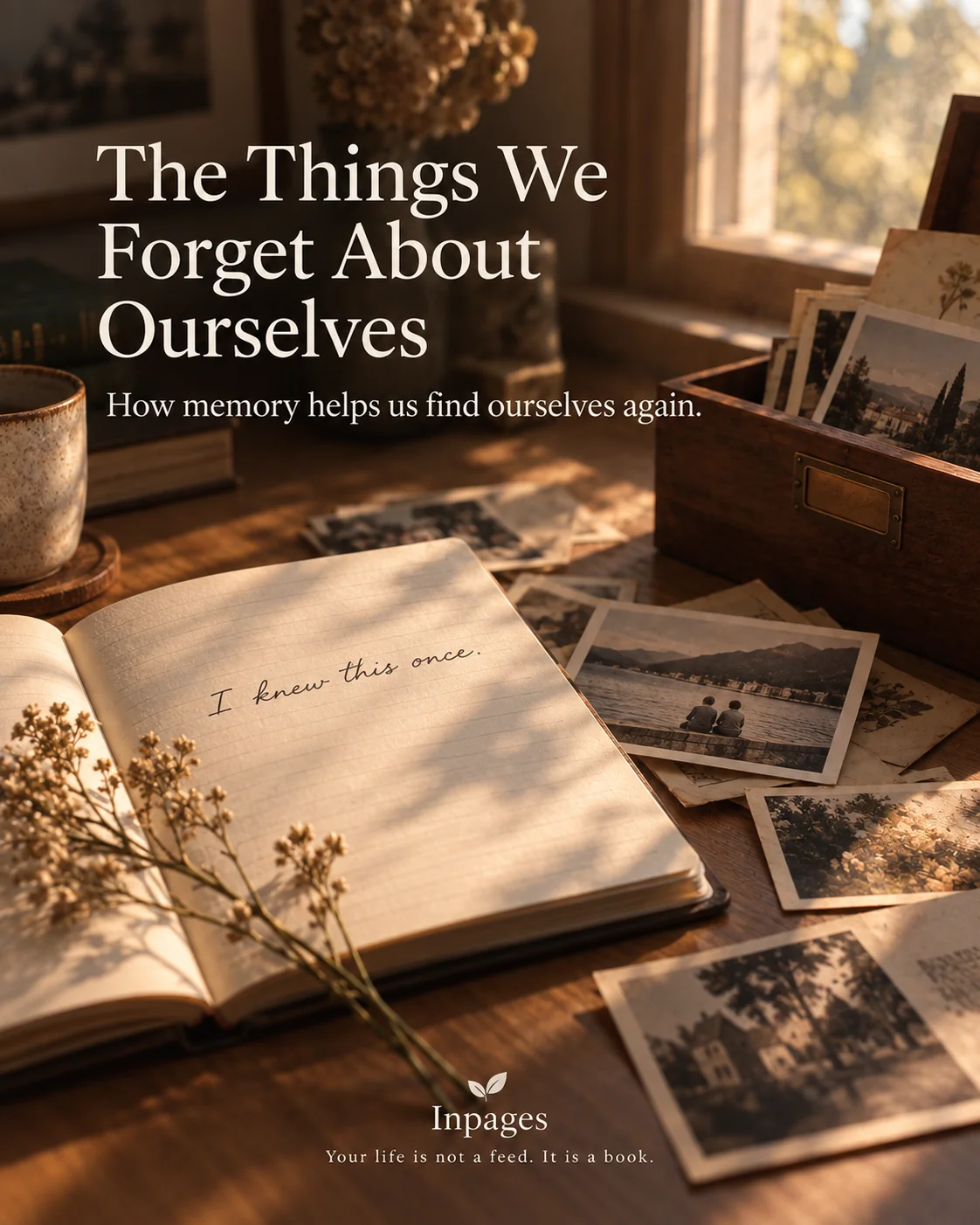
A journal remembers events. It can also remember what you once understood: the things that helped, the questions that mattered, and the scale of a moment before it became a story about everything.
Memory is more than an archive
We often remember the feeling of a difficult season and lose the detail that made it survivable. We remember the pride of a success and lose the uncertainty that came before it. A page, photo, or recording can return a fuller version of the past than a summary in your head.
Save what future you may need
Keep a note about what you learned from a hard conversation. Save the photo that reminds you life existed outside the project. Record the question you asked before a big decision. These are not rules for every future moment; they are context you may be glad to find.
Make return intentional
Not every old entry needs to be rediscovered by accident. A Recenter gives a familiar state a home for what you want to return to, without making a private memory into a public lesson. To make old pages easier to reach, see how to find old journal entries.
Let the record change with you
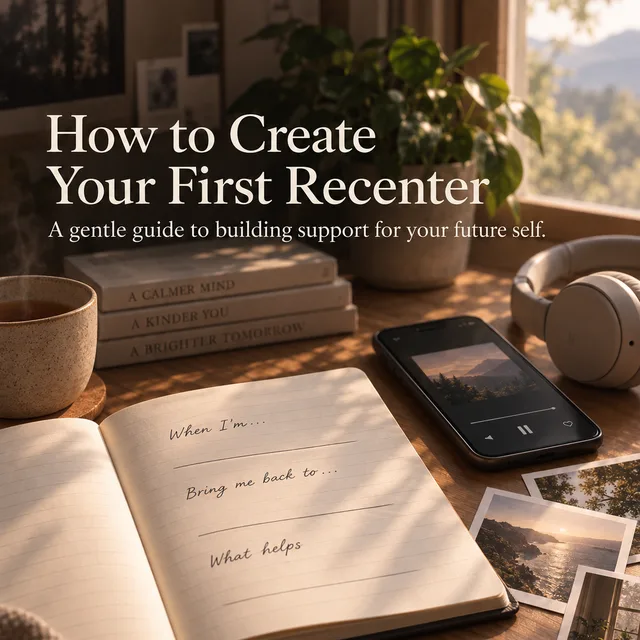
You are allowed to find an old note incomplete, too certain, or no longer useful. Keeping it does not require obeying it. The value is in having a conversation between what you knew then and what you know now. Start with writing while you are clear, or learn how to create your first Recenter.
Your first quiet page
Keep the context you may need later.
Bring a useful memory, note, photograph, or voice recording together for a moment you know will return.
- Private Memory text encrypted in your browser
- No ads or endless feed
- Recovery Key for your private vault
Start with something you are glad you learned once.