How to Create a Family Recipe Journal
Create a family recipe journal that preserves ingredients, sensory cues, family stories, contributor voices, photographs, and variations across generations.
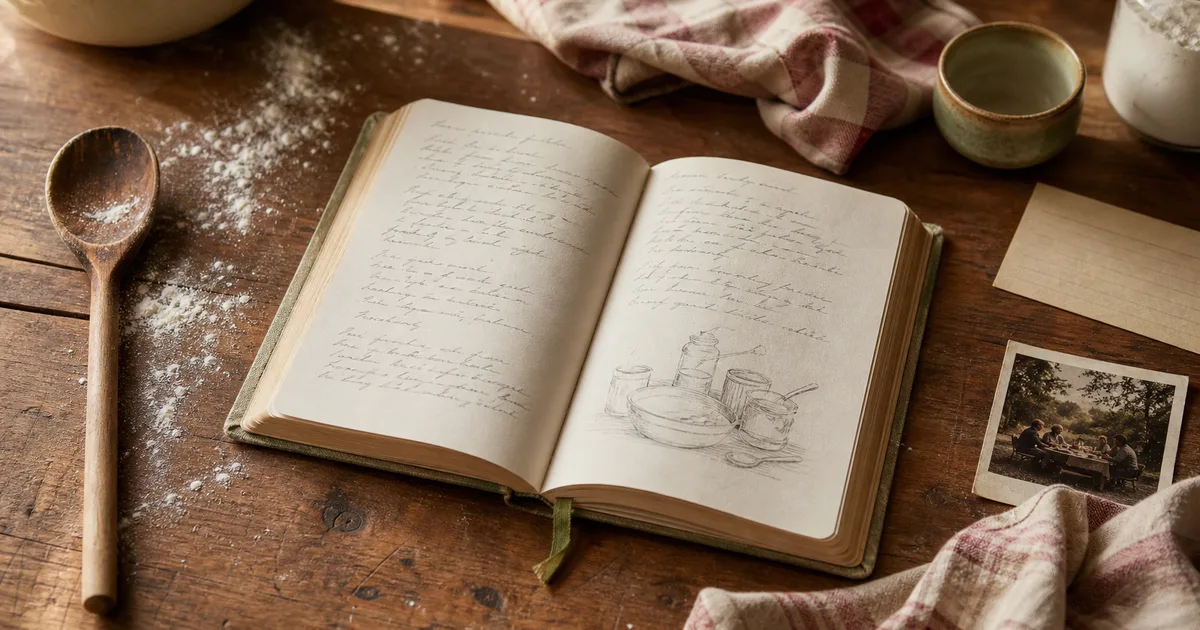
A family recipe journal preserves more than ingredients. It records whose hands taught the method, what “until it looks right” actually means, which occasions call for the dish, and how every generation has quietly changed it.
Give recipes and stories equal space
A useful recipe should still be possible to cook, so write quantities, sequence, temperature, timing, and yield as clearly as you can. Beside it, preserve the human context: the contributor, place, occasion, sensory clues, and variations. The result is both a working kitchen reference and a family record.
If the journal will include many kinds of family memories, first read how to create a family memory journal. For a recipe-centered project, one entry per dish is usually the clearest structure.
Use a complete recipe-journal entry
- Name and contributor: record what the dish is called and whose version this is.
- Ingredients: include quantities, substitutions, brands, and regional names where they matter.
- Method: write steps in order, including heat, time, texture, and visual cues.
- The story: explain when it is made, who taught it, and one scene connected to it.
- Variations: preserve changes rather than pretending there is one final authentic version.
- Date tested: note what happened when you cooked from the written instructions.
Translate sensory knowledge into words
Family cooks often work through touch, sound, smell, and appearance. Ask what the dough should feel like, how the pan sounds before an ingredient is added, which aroma signals the next step, and what color means it is ready. Phrases such as “cook until done” become useful only when the cook explains what done looks like.
Interview while you cook together
A formal interview can make familiar knowledge feel stiff. Cook the dish together and ask questions as decisions appear:
- Who first made this for you?
- Which step do people usually rush?
- What changed when ingredients or kitchens changed?
- Which occasion would feel incomplete without it?
- What mistake led to a better version?
- Who should be credited for this particular method?
FamilySearch’s guide to making a family story cookbook also suggests gathering recipes alongside the memories and people connected to them.
Photograph evidence, not only finished dishes
Include the handwritten card, familiar bowl, ingredient package, flour-covered counter, and people working together. Caption old photographs with names, place, and estimated date. Photograph fragile originals, but preserve them rather than discarding them; the Library of Congress has concise advice on caring for family photographs.
For arranging pictures and narrative on the same page, use our guide to creating a journal with photos and text.
Credit people and preserve differences
Avoid labeling one version “the real recipe” when several relatives contributed to its history. Name the person who shared each version and ask before publishing a private story or photograph. Contradictory instructions are useful evidence: test them, record the result, and let branches of the recipe remain visible.
Connect food to the wider family archive
Link the first solid food in a baby’s first-year journal, a yearly meal in a friendship journal, or a cooking day in a broader digital memory journal. One memory can belong to a larger story without being copied into every journal.
Begin with one recipe that needs a person
Choose a dish you could not recreate confidently from the ingredient list alone. Arrange one cooking session, write the sensory cues, and test the page yourself. Start a private family recipe journal on Inpages.me.
Your first quiet page
Keep writing, without turning your life into content.
Inpages.me is a calm digital journal for thoughts, photographs, and details you want to return to—without an audience or an endless feed.
Choose and pay for a membership before writing your first entry.