How to Journal Your First Year in a New City
Journal your first year in a new city through ordinary routes, neighborhood discoveries, local voices, seasonal photographs, and a thoughtful one-year review.
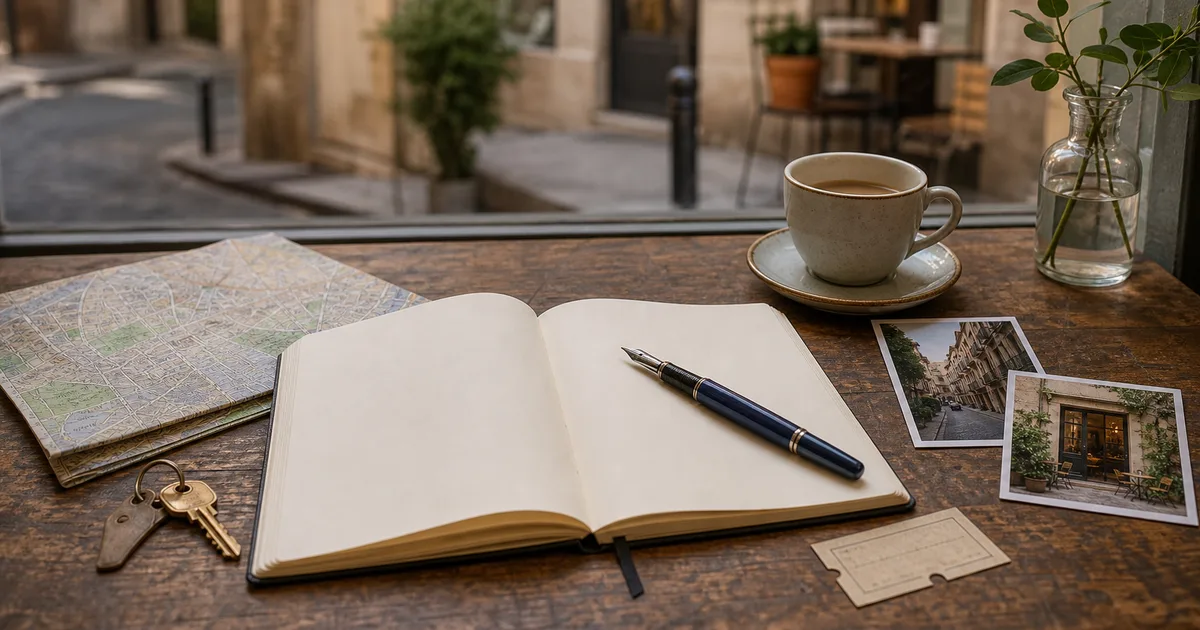
A new city journal is not a checklist of landmarks. It records how an unfamiliar place becomes navigable: the first routes, small mistakes, neighborhood rituals, local voices, seasonal changes, and the day you realize you no longer need the map.
Open with a map and your expectations
Mark home, work or study, the first grocery shop, and the route you know best. Write what you imagine the city will be like, what you are looking forward to, and what remains uncertain. These are opening conditions, not predictions you need to fulfill.
Treat the move as a life chapter with room for your interpretation to change.
Collect firsts, then keep ordinary routes
Record the first journey alone, first wrong turn, first familiar face, first local meal, first place of comfort, and first event you attended. After those milestones, keep one ordinary route each month. Note landmarks, sounds, weather, and how your attention changes.
Write one neighborhood page each month
Neighborhood and date
Why I came here
One street or building I noticed
One useful place
One small interaction
What I misunderstood or learned
Where I might return
Repetition keeps the journal grounded in lived experience rather than turning it into a travel guide you feel obliged to complete.
Learn through people without collecting them
Ask people you trust about a place that matters to them, a local change they remember, or a ritual they would miss. StoryCorps’ collection of great questions can help you begin a respectful conversation. Ask permission before recording, quoting, naming, or photographing anyone.
Photograph places you can return to
Choose a street corner, market, tree, view, cafe exterior, or station entrance and photograph it through the year. Add the date, location, and why you stopped. Repeat views show weather, construction, crowds, and your own growing familiarity.
If home itself is changing at the same time, keep room-level memories in a first-year home journal and link the two records.
Preserve local words and your corrections
Note place-name pronunciations, transit terms, foods, greetings, and phrases that initially confused you. Keep your first guess beside the later correction. If the move also involves learning a language or living abroad, the structure in our study-abroad journal guide can hold cultural and academic context.
Make room for difficult and delightful days
A city can feel generous one day and exhausting the next. Separate what happened, what you felt, and what you assumed it meant. Our guide to journaling through life changes offers a useful way to distinguish fears, predictions, and evidence without dismissing any of them.
Return to the opening map after one year
Draw the map again from memory. Add the places that became important and circle one that disappeared from your routine. Then answer: What feels ordinary now? Where do I still feel like a visitor? Which person or route changed the year? What would I show my first-day self?
Begin with the route you took today
Write where you started, where you went, one detail you noticed, and one question you still have. The city does not need to feel like home before it deserves a page. Start a private new city journal on Inpages.me.
Your first quiet page
Keep writing, without turning your life into content.
Inpages.me is a calm digital journal for thoughts, photographs, and details you want to return to—without an audience or an endless feed.
Choose and pay for a membership before writing your first entry.