George Washington’s Diaries Across Fifty Years
Explore George Washington’s diaries from 1748 to 1799—weather, farming, travel, and brief daily fact—and try a sustainable line-a-day archive of your own.
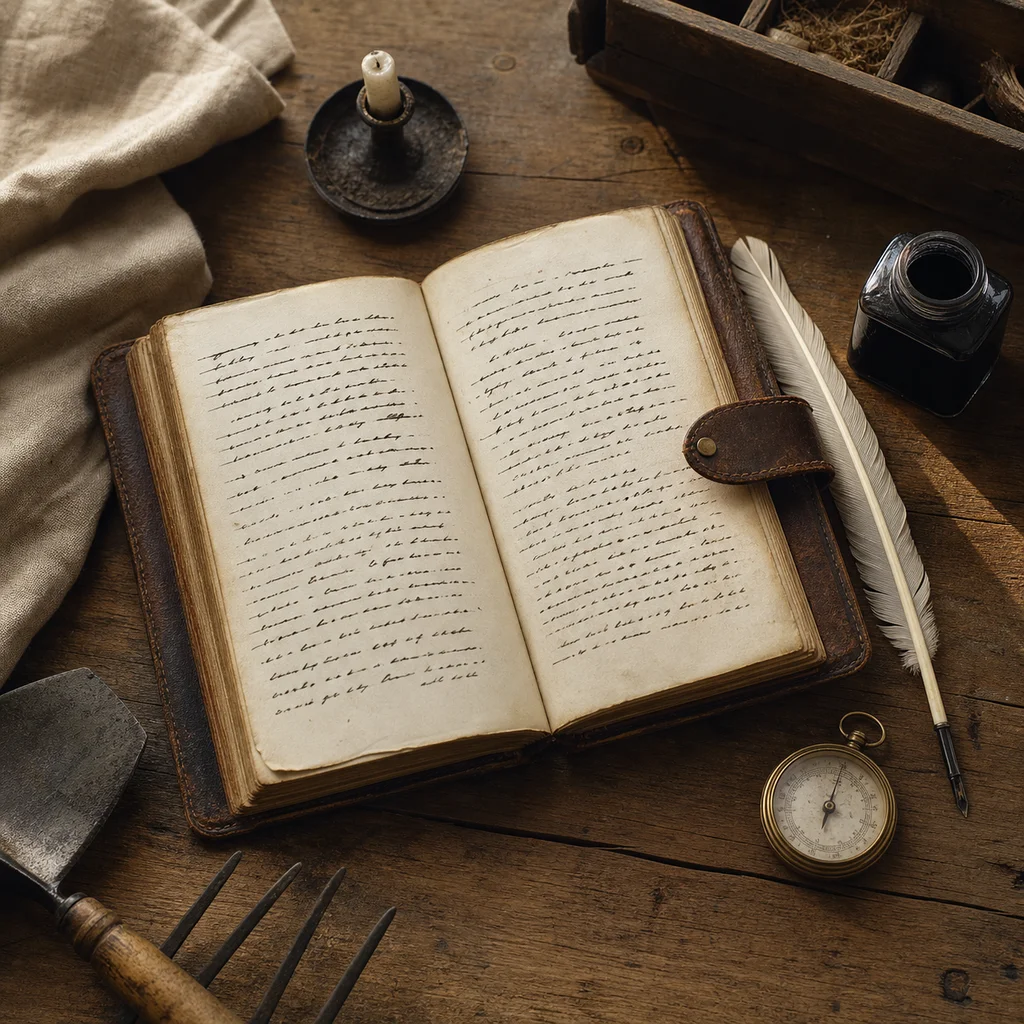
George Washington kept diaries from 1748 until the day before his death in 1799, recording weather, farming, travel, military movements, and daily routines across more than fifty years. The Library of Congress holds thirty-seven of the fifty-one known volumes. Founders Online and the Papers of George Washington publish transcriptions that show a lifelong habit of brief, dated entries rather than reflective essays.
The diary was often a ledger of fact
Washington's surviving diaries frequently note temperature, wind, crops, visitors, and where he slept. During public life the same books tracked journeys, meetings, and military events. The tone is compressed. A day may occupy a few lines that later historians can align with letters, accounts, and official records.
That compression is instructive. A lifelong archive does not require eloquence on every page. It requires enough dated detail for a future reader—often yourself—to reconstruct context. John Quincy Adams's 51-volume diary alternated between full entries and brief lines across an even longer span; Washington's record shows how a statesman's notebook could stay closer to a farm and field log.
Continuity survived interruption
Not every year is equally documented. Gaps, damaged pages, and lost volumes remind us that even a famous daily practice was uneven. The documentary edition annotates entries so readers can connect a weather note to a larger event without treating every line as complete history.
If you want a sustainable lifelong record, borrow Washington's fact-first habit before you borrow his schedule. Our guide to Writing the Whole Life describes layered archives; Washington's diaries show the bottom layer: date, place, weather, work, one detail.
Try a line-a-day record with five fields
- Date and place
- Weather or season (one word may be enough)
- Main work or responsibility
- One person encountered
- One detail you might forget
Write a longer page only when a decision, loss, or journey needs context. Queen Victoria's journals show another lifelong royal record edited after the fact; Washington's published diaries remind us that annotation and survival shape what "daily" finally means.
Fame does not make a diary public by default
Washington's notebooks are now historical documents. Your journal deserves an explicit boundary about access, transcription, and sharing while you are alive and after. Read Should You Share Your Journal? before assuming that a useful record must become a public one.
Begin a private life archive on Inpages.me with today's date, place, and one ordinary detail your future self may not remember unaided.
Sources and notes
- Library of Congress: George Washington Papers—Diaries
- Founders Online: The Papers of George Washington
- Library of Congress: Washington's Diaries Available Online
Sources reviewed August 17, 2026. Volume counts follow the Library of Congress and documentary edition notes.
Your first quiet page
Keep writing, without turning your life into content.
Inpages.me is a calm digital journal for thoughts, photographs, and details you want to return to—without an audience or an endless feed.
Choose and pay for a membership before writing your first entry.