Inside Frida Kahlo’s Illustrated Diary
Explore Frida Kahlo’s illustrated diary of writing, painting, drawing, poems, and notes—and learn how to let images and words share one private page today.
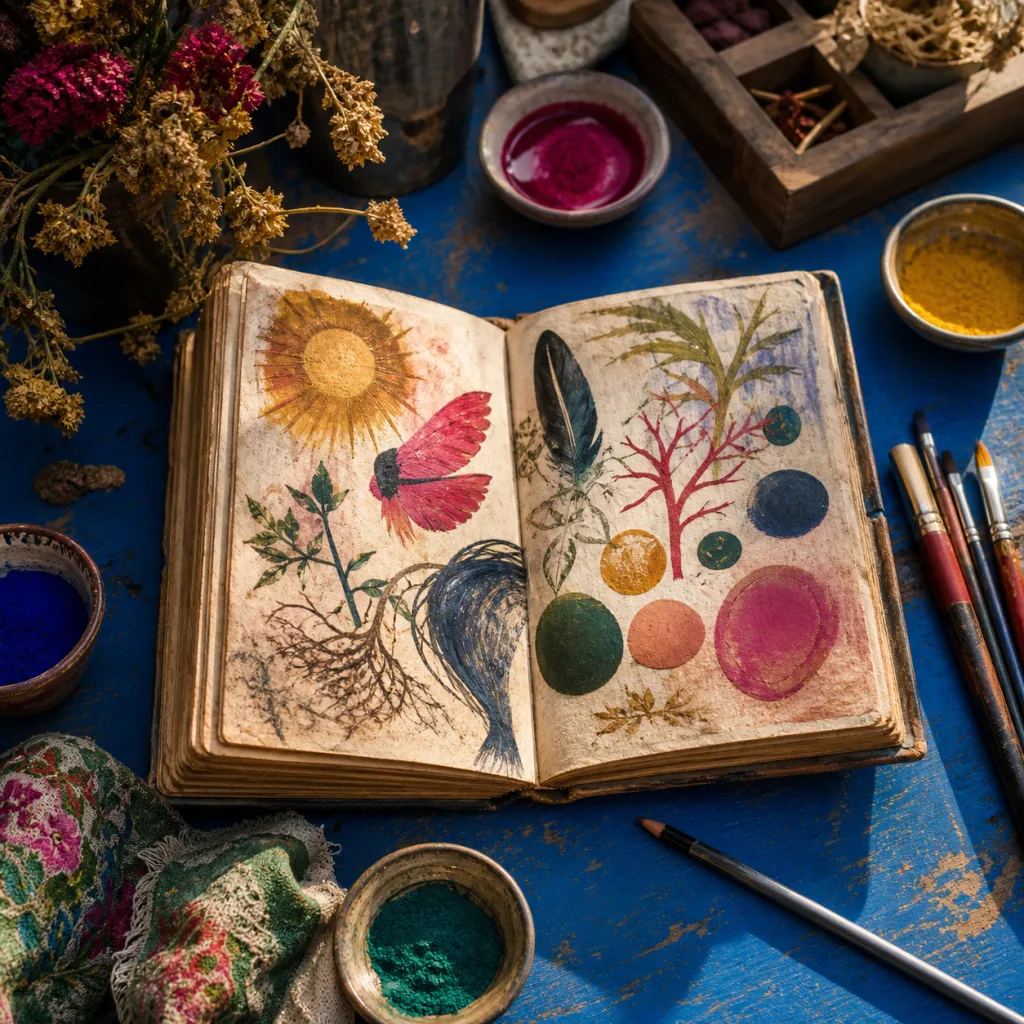
Frida Kahlo's diary from 1944 to 1954 combines writing, painting, drawing, poems, and notes. It is neither a conventional daily log nor merely a sketchbook. Its pages show how a journal can hold visual and verbal expression together when one mode alone cannot carry the experience.
The diary began late in Kahlo's life
Museo Frida Kahlo dates the diary from 1944 to 1954, the last decade of the artist's life. The museum describes pages filled with thoughts, reflections, poems, notes, paintings, and drawings. That documented date range matters because the diary should not be treated as a complete private record of her whole life or career.
It is one surviving object within a larger body of paintings, letters, photographs, personal belongings, and other records. A diary can reveal a voice without becoming a total explanation of its writer.
Image and language do not have to illustrate each other
In an illustrated journal, a drawing does not need to decorate a finished paragraph. Color may carry intensity. A repeated shape may hold a feeling before it has a name. A line of text can interrupt or contradict an image. The page can preserve both without forcing agreement.
This is different from adding a photograph only to prove that an event happened. In a visual diary, the marks themselves are part of the thinking. Our guide to creating a journal with photos and text offers one structure for documentary images; an illustrated diary can remain looser and more symbolic. If you are still choosing the form, compare a photo journal, photo album, and scrapbook by the job you want the images to do.
Do not imitate the surface and miss the private language
Kahlo's recognizable visual world makes the diary tempting to copy as a style. A more respectful adaptation begins elsewhere: allow your own repeated colors, shapes, fragments, and symbols to acquire meaning over time. They do not need to look artistic or be legible to an audience.
Avoid assigning universal meanings. A broken line, bird, root, body, or color does not carry one interpretation for every person. Write a short note about what the mark means to you today, then let a later page revise it.
Try a page with three layers
- What happened: one sentence with the date and concrete context.
- What it felt like: color, shape, collage, or a rough drawing.
- What remains unsaid: a fragment, question, or unfinished line.
You can reverse the order. Begin with color, then discover what words are possible. Keep the entry rough enough that it still belongs to the moment. Stickers and decorative materials can help, but visual nostalgia in a digital diary should support memory rather than turn the page into a performance.
A visual diary still needs a privacy boundary
Images can reveal people, bodies, medical context, locations, or relationships even when no names appear. Cropping, abstraction, or symbols may reduce exposure, but they do not automatically make a page safe to publish. Decide whether the page is for private expression, one trusted person, or a public audience before sharing it.
The diary of a famous artist is now encountered through publication and museum interpretation. Your journal does not owe anyone that future. Read Should You Share Your Journal? before turning an intimate visual page into public content.
Begin a private illustrated journal on Inpages.me with one color, one shape, and one sentence that belong to this day.
Sources and notes
Sources reviewed August 8, 2026. Kahlo's diary and images remain subject to rights held by their respective owners; this article does not reproduce them.
Your first quiet page
Keep writing, without turning your life into content.
Inpages.me is a calm digital journal for thoughts, photographs, and details you want to return to—without an audience or an endless feed.
Choose and pay for a membership before writing your first entry.