How to Keep a Museum and Exhibition Journal
Keep a museum and exhibition journal with observation prompts for one work, the room around it, your response, and the questions you bring home later.
A museum or exhibition journal helps one encounter remain after the gallery closes. It does not need to document every room or prove what you saw. It gives one work, one question, or one unexpected feeling enough space to become part of your own record.
Choose one work before trying to keep everything
A long exhibition can leave you full and unable to say why. Instead of summarizing the whole visit, choose one work that held your attention. It may be famous, unfamiliar, beautiful, difficult, or simply impossible to pass quickly.
A single attentive page often preserves more than a complete list of rooms. Other visits can receive their own entries when they earn one.
Begin with what you can actually see
Before reading every wall label, describe the work in your own words. Notice scale, colour, material, light, gesture, texture, distance, and what your eye returns to. Then name what changed when you learned more.
The Metropolitan Museum of Art’s looking questions for artworks begin with “What do you see?” and return to the question after closer study. That sequence is useful for a private journal because it leaves room for both first impression and later understanding.
Try a three-moment exhibition entry
- Arrival: date, exhibition, room, and the mood you brought in.
- Attention: one work and the specific detail that kept you there.
- After: what the encounter made you question, remember, or look for next.
Add the artist, title, and date accurately when they are available. Your response can stay incomplete.
Keep the room around the work
The gallery temperature, a child’s remark, the order in which you entered, or the silence before a crowded piece can all shape the encounter. These details are not distractions from art history. They are part of your memory of seeing this work on this day.
If a postcard, ticket, or leaflet belongs to the story, write why it stayed and give it a place in a collection journal.
Let drawing and writing work together
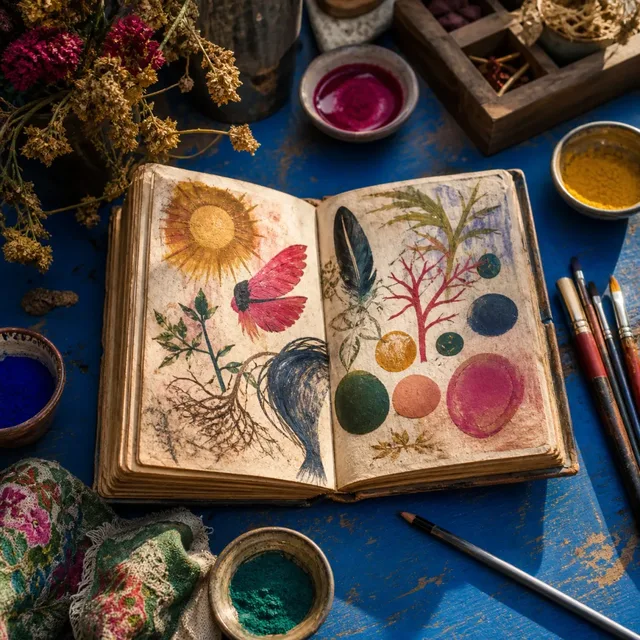
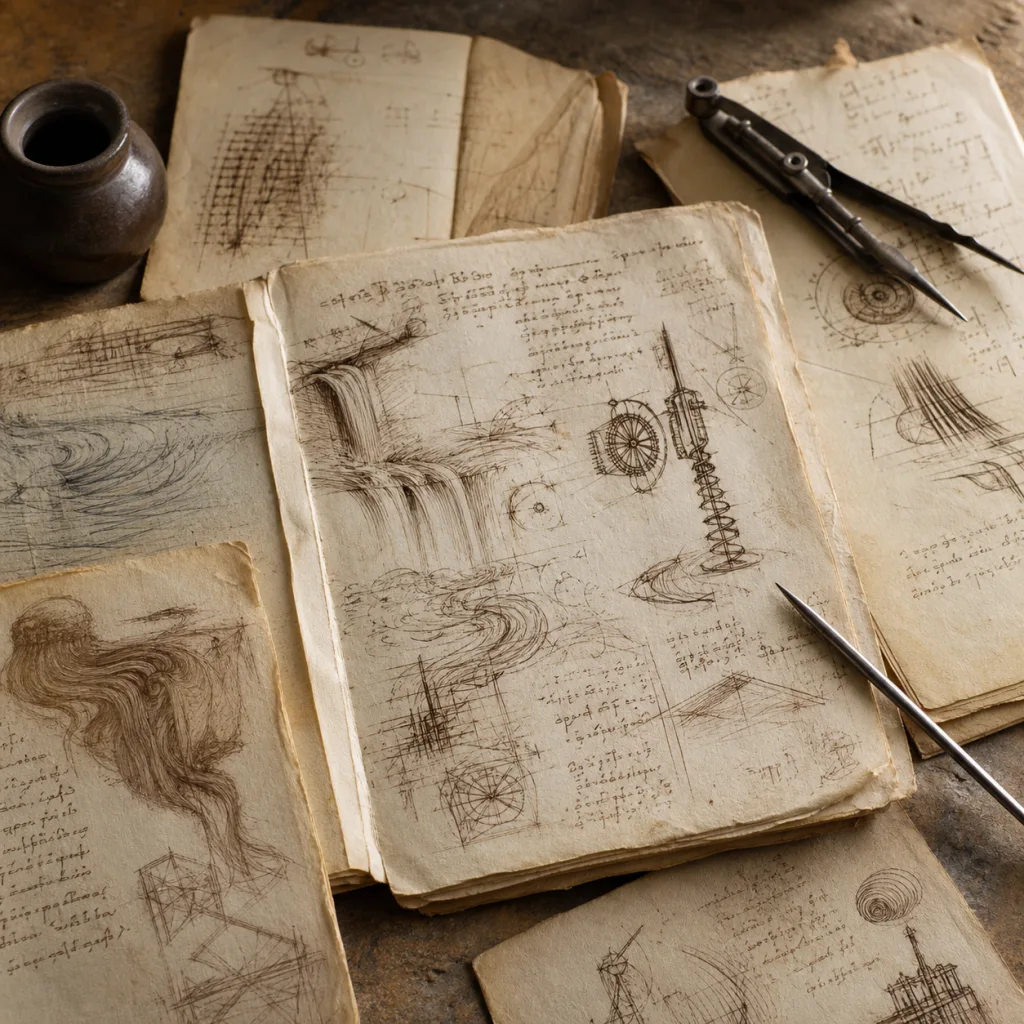
A rough sketch of a shape, palette, route through the room, or detail in a frame can help your eyes slow down. It does not need to copy the artwork faithfully. Pair it with a few words about what you were trying to notice.
For a more visual and symbolic page, see how an illustrated diary can hold image and language together. For ideas gathered across many encounters, a commonplace book may be the better home.
Separate what the label says from what you think
The label gives useful context. Your journal should make the boundary visible: write the source or a brief paraphrase, then add your own response beneath it. This prevents museum language from quietly replacing the particular encounter you had.
Do not reproduce catalogue essays or images without permission. A title, a brief note, and your own observation are usually enough for a personal page.
Return when the exhibition has had time to settle
A few days later, ask what still remains. Did the work change a familiar idea? Did another book, film, or place start to echo it? Add a dated return note rather than refining the first one into something polished.
A personal culture journal can keep those connections across art forms without flattening them into ratings or recommendations.
Begin with the work you cannot quite leave
Write its title, the room, and one detail you can still see. Start a private exhibition journal on Inpages.me and let the next question be more important than a finished interpretation.
Sources and notes
- The Metropolitan Museum of Art: The Art of Renaissance Europe
- The Metropolitan Museum of Art: How curators and conservators look at a tapestry
Your first quiet page
Give one encounter enough room to remain.
A private page can preserve the details, questions, and unexpected connections that begin in a gallery and keep changing afterward.
Choose and pay for a membership before writing your first entry.