How to Preserve Family Traditions in a Journal
Preserve family traditions with stories, voices, photographs, recipes, and gentle prompts that show how a ritual changed across generations over time.
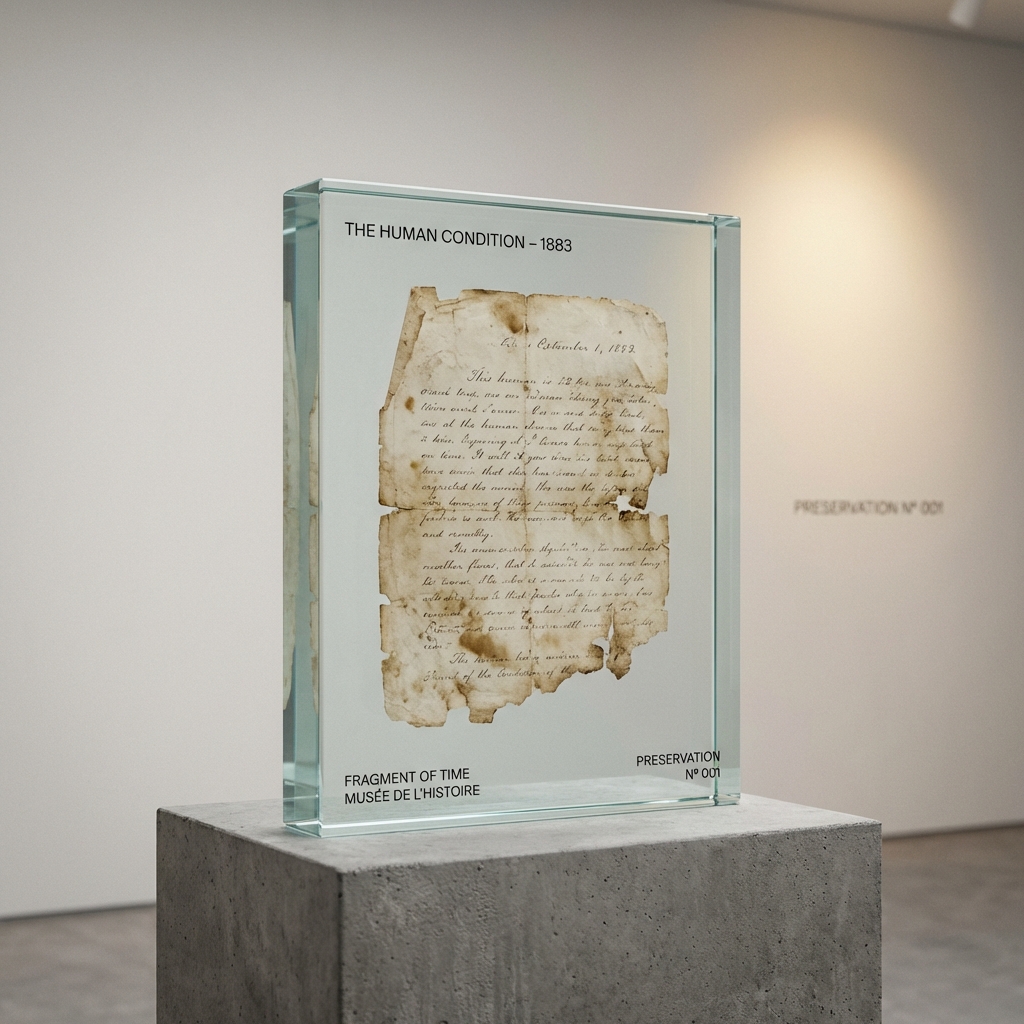
Family traditions are often remembered as if they never changed. A journal makes room for the better story: who started a ritual, what it looked like this year, whose voice is missing or newly present, and how a familiar gathering changes across generations.
Choose one recurring ritual
Start with something specific: a meal, holiday, birthday custom, journey, song, game, or way of welcoming someone home. “All our traditions” is too wide. One ritual gives people something concrete to remember and compare.
The Library of Congress invites students to explore family customs through their people, food, music, location, and oral history. Those are useful entry points for a journal too. See its family customs activity for more prompts.
Record the ritual as it happened this time
Begin each entry with the date, place, people present, and what happened in order. Include the practical details: what was cooked, played, packed, said, or forgotten. These are the details a future reader cannot reconstruct from a holiday photograph.
Ask for many versions of the story
Ask relatives what they remember, who taught them, and when the tradition felt most different. Attribute the answer to its speaker instead of collapsing everyone’s memory into one official history. A younger person may notice a ritual differently from an older one, and both accounts can belong.
For a fuller conversation, adapt questions from an oral-history journal for a loved one.
Keep recipes, sounds, and objects with their stories
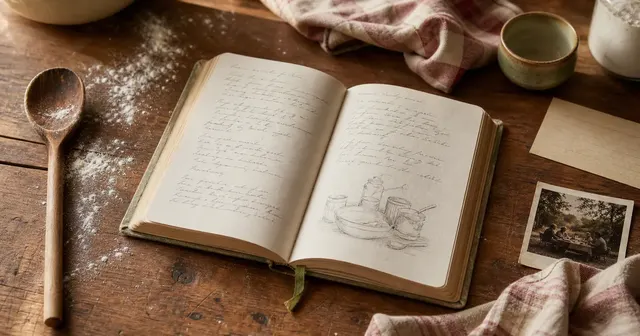
A recipe card, a serving dish, the music someone always chooses, or a tablecloth can carry the ritual forward. Photograph or describe the object, then write who uses it and why it matters. This lets the thing stay connected to the people around it.
If food is a natural doorway, use a family recipe journal to preserve the ingredients and the memories around them. For annual songs or performances, a music listening and concert journal can hold a parallel record.
Write captions that name the context
For each image, note who is there, where it was taken, the approximate date, and what happened before or after the frame. Say when you are unsure. A caption such as “possibly the first year at this house” is more useful than pretending to know.
Ask before including another person’s story
A family journal can be private and still affect living people. Ask what may be written, who may read it, and whether a person wants their name, image, or account left out. Be especially careful with children, conflict, grief, health, finances, and stories that are not yours alone to tell.
Let traditions change without calling them lost
A smaller gathering, a new home, a missing ingredient, or a different language does not erase the tradition. Record the change and what remains. These entries can become an annual companion to birthday journal prompts.
Begin with the next gathering
Before the event, write one question to ask and one detail to notice. Afterwards, add a few lines while the room is still clear. Start a private family tradition journal on Inpages.me with one ritual that deserves its own record.
Your first quiet page
Keep writing, without turning your life into content.
Inpages.me is a calm digital journal for thoughts, photographs, and details you want to return to—without an audience or an endless feed.
Choose and pay for a membership before writing your first entry.