How to Start a Garden Journal for Every Season
Start a garden journal that records planting dates, weather, varieties, wildlife, photographs, and seasonal lessons with a simple repeatable entry format.
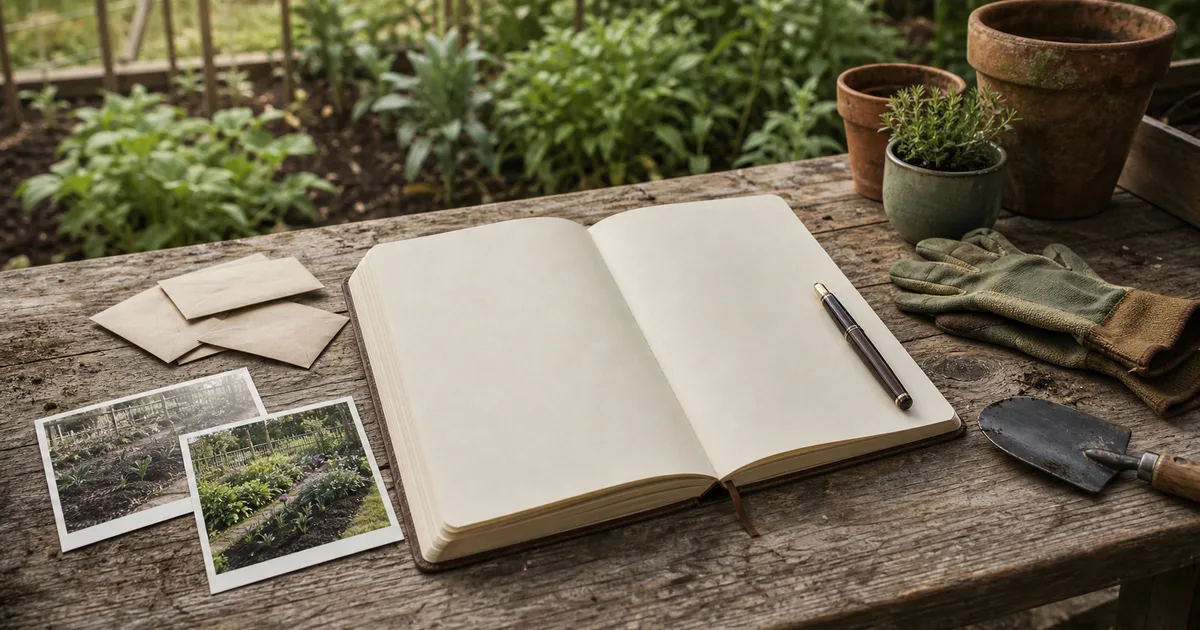
A garden journal records what you planted, what the season did, and what it felt like to watch a small place change. It can help next year’s decisions without turning the garden into a test you must pass.
Begin with a simple map and baseline
Sketch the beds, containers, paths, fences, and large plants. Mark north if it is useful, then note where morning and afternoon light fall. Add the date, the garden’s general condition, and one wide photograph from a viewpoint you can find again.
This opening page is the starting point of a life chapter, not a technical survey. Approximate shapes and ordinary language are enough.
Record the details that answer future questions
For each planting, write the date, plant or variety, source, location, weather, and what you did. Later, add the first flower or harvest, visible stress, wildlife, and anything you would change. Iowa State University Extension’s guide to garden journaling recommends this mix of dates, weather, varieties, maps, photographs, and observations.
Follow a four-season rhythm
- Early season: hopes, layout, seeds, soil work, and the first signs of growth.
- High season: flowers, harvests, watering, visitors, problems, and what surprised you.
- Late season: what lasted, what faded, saved seeds, and changes worth making.
- Quiet season: one page of reflection, a rough plan, and no demand to solve everything.
A weekly entry during busy months and a monthly entry during slower months is often enough. The journal should follow the garden’s pace.
Use one repeatable garden entry
Date and weather
Place or plant
What changed
What I did
What I noticed
One question for next time
Example: “May 18, warm after two wet days. The beans by the south fence reached the second string. I tied one loose stem and saw the first bee on the thyme. Next time: check whether the back corner is staying too damp.”
Photograph the same views over time
Choose three or four repeatable viewpoints: the doorway, the end of a bed, one container, and one close-up subject. Photograph them from roughly the same place each month. The comparison will show growth, light, and seasonal change that isolated beauty shots cannot.
Add a short caption with date, place, and why the image matters. Our guide to combining photos and text can help you keep the page readable.
Keep the living story, not only the results
Record the smell after rain, a child counting tomatoes, the bird that returned, the chair everyone chooses, or the first meal made from the harvest. Beatrix Potter’s nature journals offer a useful reminder that close observation can hold curiosity as well as classification.
Review the season without grading it
At the end of a season, answer four questions: What thrived? What struggled? What did I enjoy enough to repeat? What would make the garden easier to care for? Separate weather and other constraints from your own choices. A failed planting can still produce a valuable note.
Let the garden become part of home
If the garden belongs to a place you are newly learning, connect its first bloom, meal outdoors, or changing view to a first-year home journal. Begin with one map, one photograph, and today’s weather. Start a private garden journal on Inpages.me.
Your first quiet page
Keep writing, without turning your life into content.
Inpages.me is a calm digital journal for thoughts, photographs, and details you want to return to—without an audience or an endless feed.
Choose and pay for a membership before writing your first entry.