Introducing Feelings: your words, one small check-in
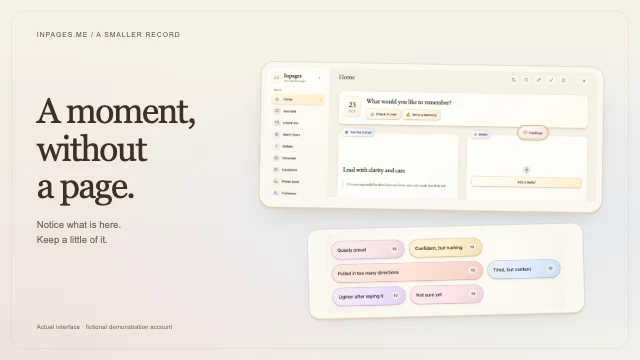
Meet Feelings in Inpages.me: choose your own words, record a feeling without a form, and return to its score and time alongside your everyday diary entries.
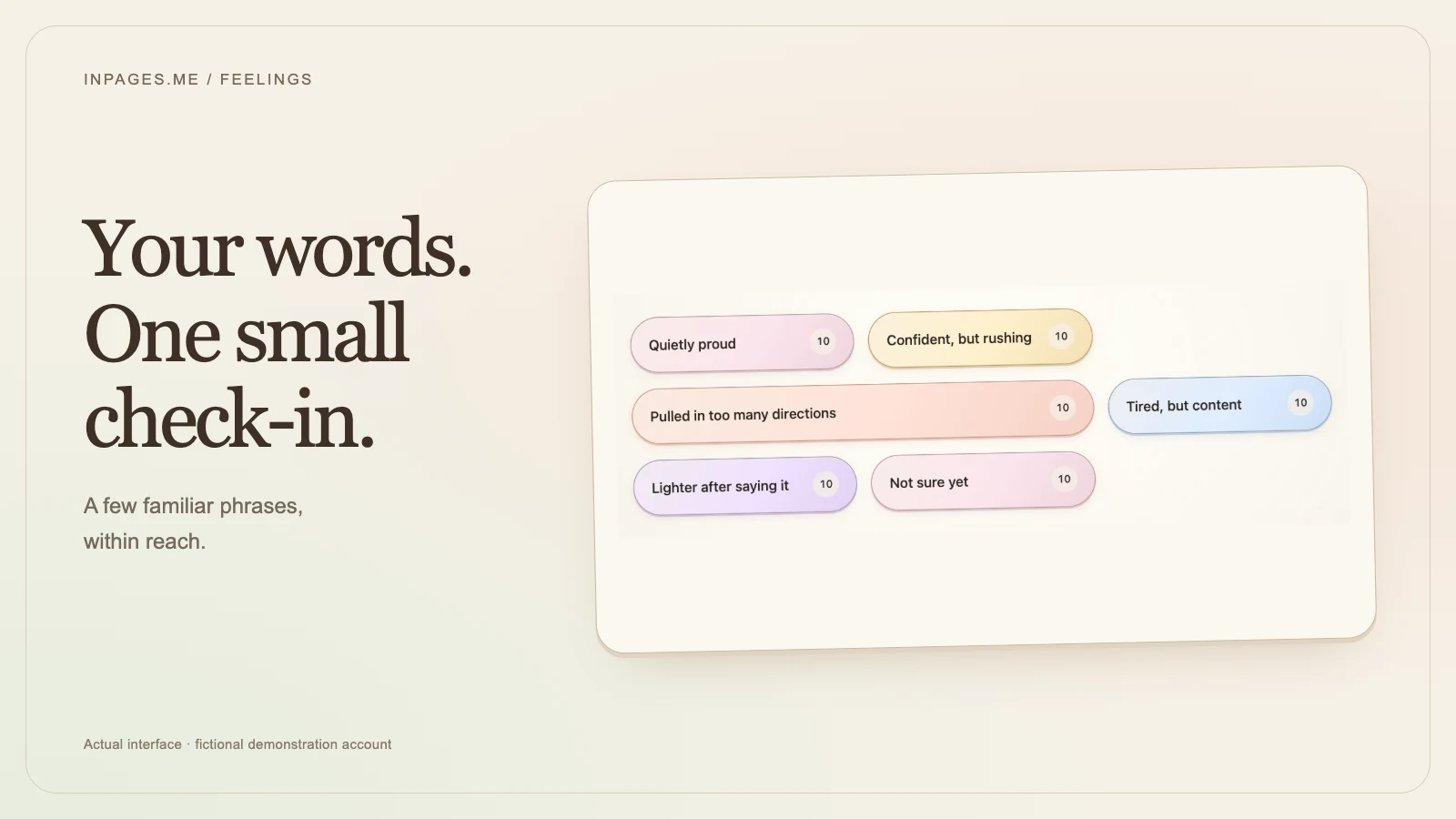
Feelings is a small way to record how you feel in Inpages.me. Choose a phrase you have saved, release the button, and return to what you were doing. Your Feelings history keeps the phrase, the score you chose, and the time.
You might notice that you are quietly proud after finishing something, or confident, but rushing before a meeting. There may be no longer story to write yet. That small observation can have a place of its own.
Begin with words you recognise
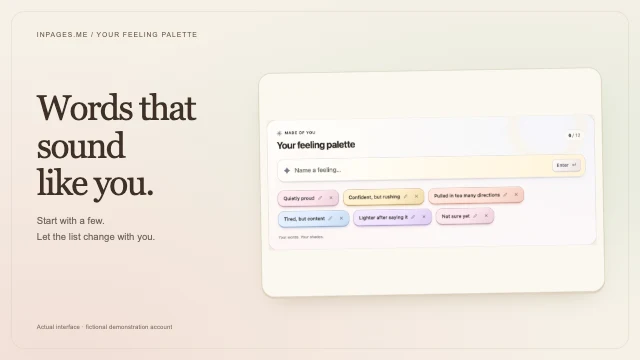
In your account, choose Check-ins in the navigation to open your diary, then the Feelings tab. The feeling palette above the statistics is where you keep your own phrases.
Type a feeling and press Enter to add it. Start with three or four phrases you often wish you had noticed sooner. You can keep up to 12, including phrases rather than single words.
Try “pulled in too many directions,” “lighter after saying it,” or simply “not sure yet.” The personal feelings list offers more examples you can adapt. There is no required set of emotions to work through.
Keep a small button within reach
The floating Feelings button stays available as you move around Inpages.me. You can drag it to a comfortable place on the screen; this browser remembers its position for your account.
Choose it to open a full-screen view of your feeling buttons. Your writing stays where you left it, including an unfinished entry beneath a popup. Choose blank space, press Escape, or use the floating button again when you want to return.
Release a feeling to record it
A quick tap records 10 points. Holding a feeling button lowers the selected score toward 1 over two seconds. Release to save the score shown. Holding changes the score you save; it does not measure whether your emotion has changed.
The saved feeling leaves the screen, giving the remaining choices a little more room. You can record another feeling or return to your day. Opening Feelings again restores the full list. When you have recorded every option in that opening, the scene closes.
No note, photograph, or title is required. If you want a practical example of this smaller kind of record, read how to track your feelings without writing a journal entry.
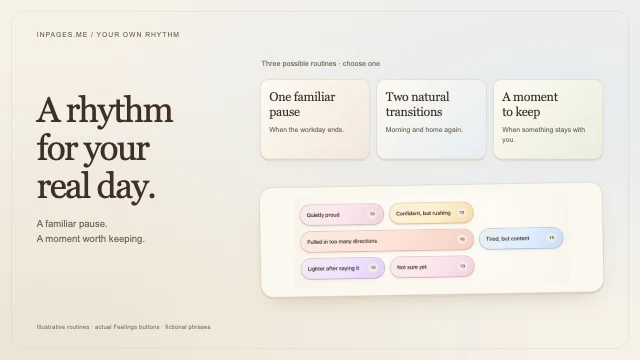
You can use a familiar pause or return when something changes. The guide to how often to log your feelings offers three flexible routines to adapt.
Return to the records when you have time
Your quick records stay in the Feelings tab. It shows how many times you recorded each phrase, its points, and when you last used it. Choose a 7-, 30-, or 90-day view, or look at one feeling at a time.
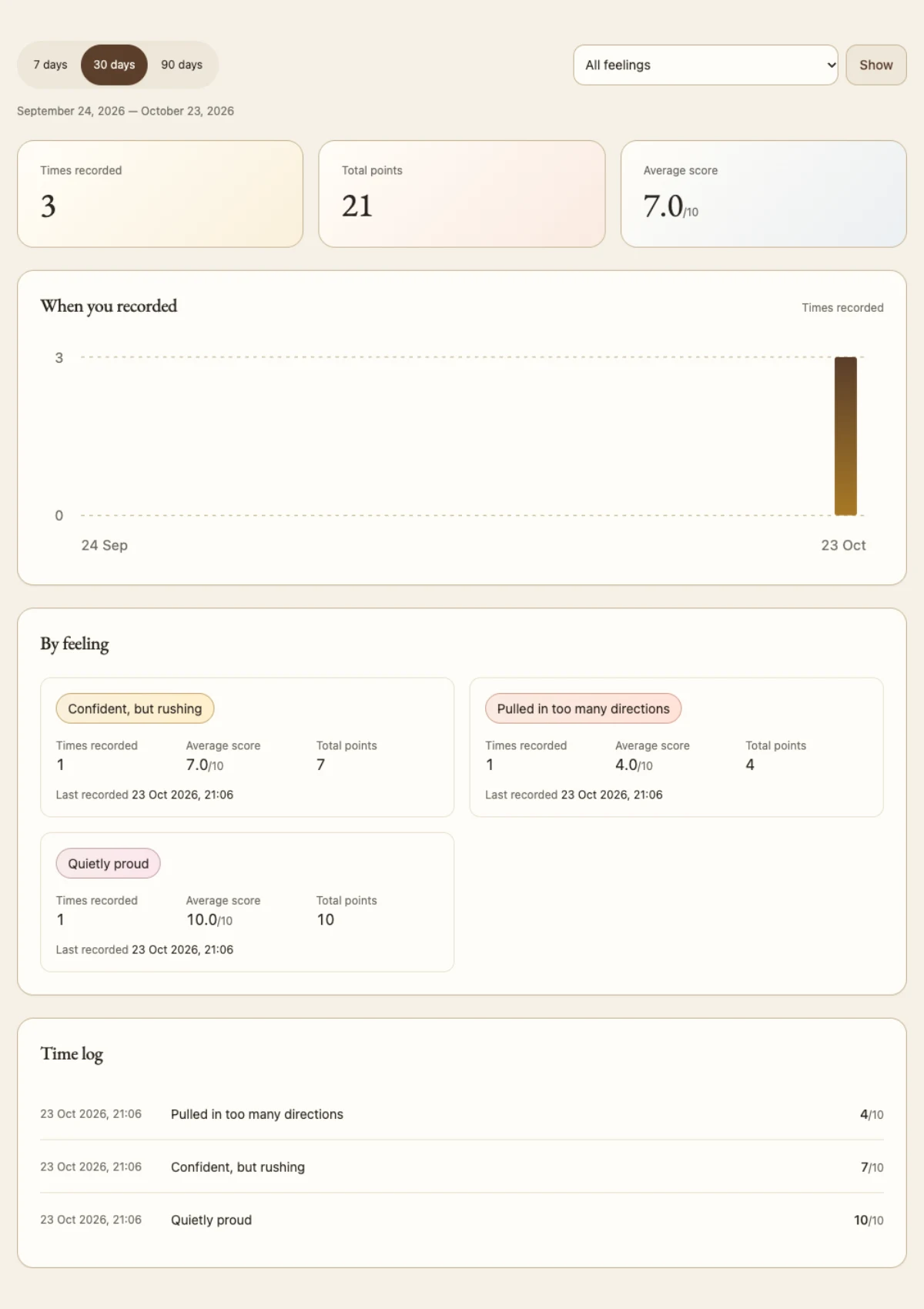
A count describes your saved records. If you tend to check in when you are frustrated, those entries will be more visible in the list. Unrecorded moments still belong to the day. The guide to reading a mood chart with curiosity offers questions for a gentler review.
Let your palette change with you
Choose a phrase in your feeling palette to rename it, then press Enter. Its separate remove button takes it out of the palette. Your older records keep the words they had when you saved them.
You might discover that “stressed” is too broad, while “trying to answer everyone at once” is easier to recognise. You can make that change without rewriting your past.
Keep room for a longer entry
A quick feeling keeps the moment in your Feelings history. When you want to explain what happened, a Daily Check-in gives you room for writing and other details in your diary.
Feelings belongs to your account and has no public sharing control. Feeling names, scores, and times use Standard protection, rather than the extra private lock available for longer diary writing. The privacy details explain what each choice covers.
An account with writing access can record feelings and edit its palette. For a new account, choose a paid membership before you begin. Start with a few words you would actually use, and let a small record be enough for the moment.
Your first quiet page
Keep a few familiar feelings within reach.
Choose a membership for quick feeling records, a diary, and the longer writing you want to keep beside them.
Choose and pay for a membership before writing your first entry.