Virginia Woolf’s Reading Notebooks
See how Virginia Woolf used reading notebooks as part of her craft, then build reading notes that preserve sources, questions, connections, and changing ideas.
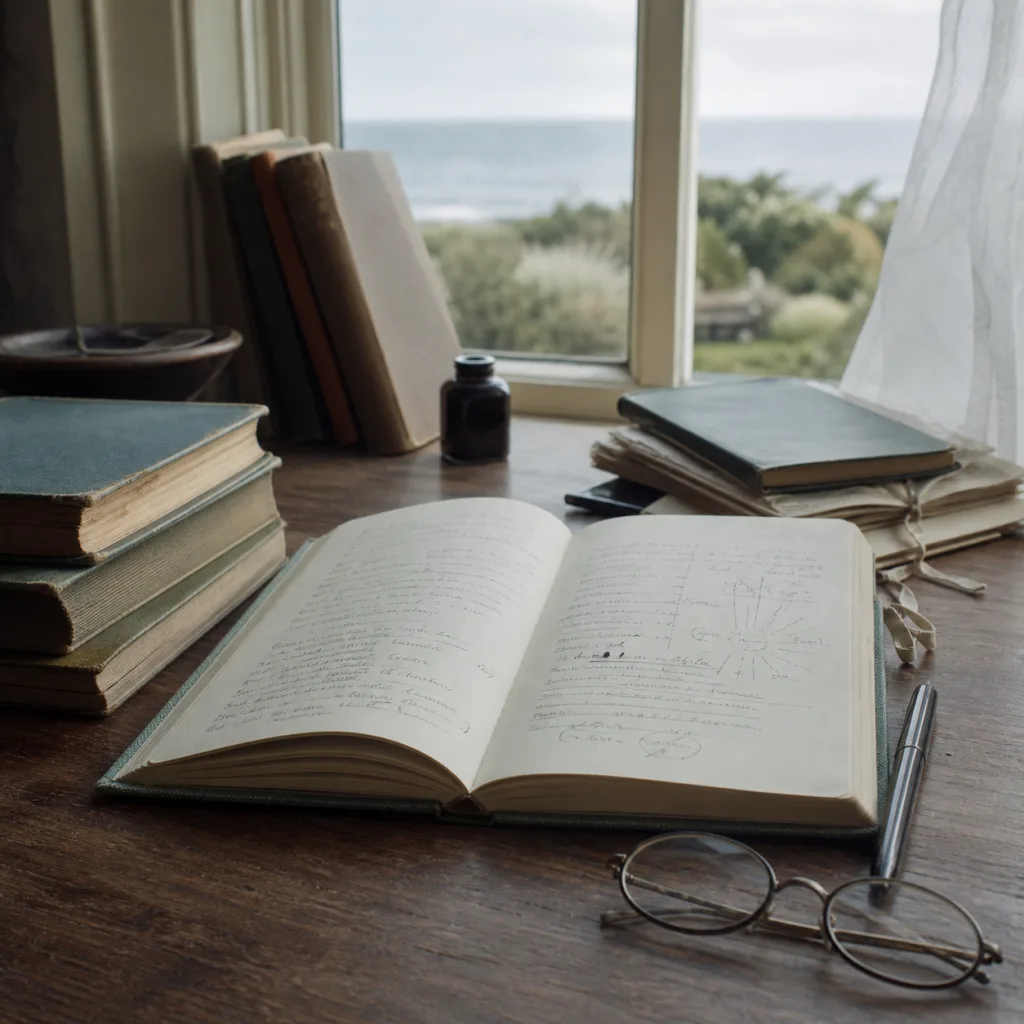
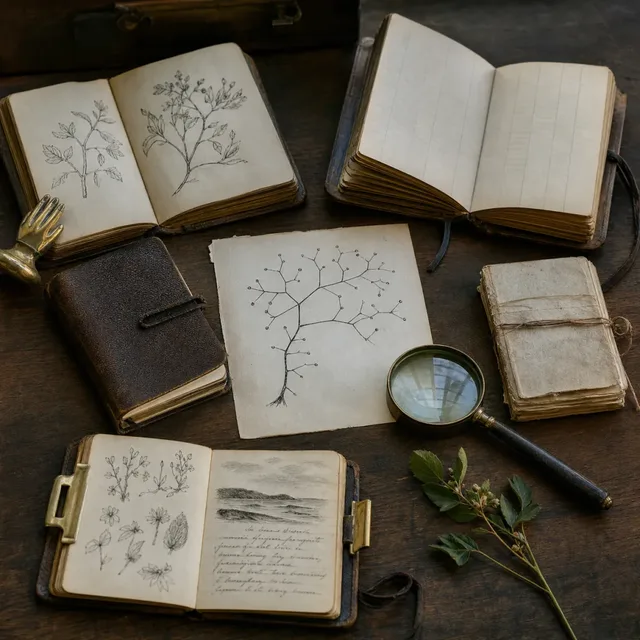
Virginia Woolf kept extensive reading notebooks alongside diaries, drafts, and other working papers. The notebooks show reading as part of writing: passages, sources, reactions, and research remained available for later thought. Her practice was not simply collecting quotations. It was sustained attention conducted with a pen nearby.
There was more than one kind of private book
The New York Public Library's Virginia Woolf collection includes diaries kept from 1897 to 1941, notebooks, manuscripts, correspondence, and typescripts. Her reading notes survive across several archives. Brenda Silver's scholarly guide describes and identifies the sources of sixty-seven volumes of reading notes.
That variety warns against placing every handwritten page under the single label “journal.” A diary can follow lived time. A reading notebook can follow books, arguments, and research. A draft notebook can follow the making of one work. These forms may influence one another without serving the same job.
If one notebook is currently trying to hold all of those jobs, begin by comparing a reading journal, commonplace book, and personal journal. Separate them only when the distinction helps you return to the material.
Reading with a pen changes the pace
Looking back on her long association with the Times Literary Supplement, Woolf wrote that the work taught her elements of craft and made her read seriously with a pen and notebook. The sentence connects reading, criticism, and writing. The notebook did not sit after reading as an administrative summary; it participated in the encounter.
A pen creates a small pause. You decide whether a passage deserves copying, whether a claim needs questioning, and whether an unfamiliar reference should be followed. The pause need not produce a polished interpretation. It only needs to leave enough context for thought to resume later.
A useful reading note contains your response
Copying a striking sentence can preserve its wording, but a durable entry also records why it mattered on this reading. Try five parts:
- Source: author, title, edition, and page.
- Passage or claim: quote briefly or paraphrase accurately.
- Response: what it clarified, disturbed, or contradicted.
- Connection: another text, experience, or open question.
- Return: what you want to check when you encounter the idea again.
This is close to the method in How to Start a Reading Journal, but it becomes more powerful when the entry preserves disagreement as carefully as admiration.
Do not turn someone else's archive into a productivity myth
Sixty-seven volumes can sound like a target. It is not. They accumulated across a lifetime of reading and professional writing. A modern reader does not need a large archive to prove seriousness, and an archive is not valuable merely because it is extensive.
Begin with the book in front of you. Some books may receive one line. Another may generate pages of questions. Let the density reflect the encounter rather than a quota.
Build a conversation you can re-enter
At the end of a month, reread notes from two or three different books. Mark a recurring question, a changed opinion, or a disagreement between authors. Add a dated response without rewriting the earlier entry. This preserves your history as a reader as well as the information you gathered. As the collection grows, a journal index that remains useful over time can point back to recurring authors, questions, and disagreements.
For work that must track sources, methods, and dead ends more formally, use a research journal for a long project. For looser ideas gathered across life, a commonplace book may be enough.
Begin a private reading journal on Inpages.me with one passage and the honest reason you stopped beside it.
Sources and notes
- Dartmouth Digital Publishing: Virginia Woolf's Reading Notebooks
- New York Public Library: Virginia Woolf collection of papers
- WoolfNotes digital reading-notebook project
Sources reviewed August 8, 2026. Short historical wording is paraphrased except where quotation is necessary to identify Woolf's stated practice.
Your first quiet page
Keep writing, without turning your life into content.
Inpages.me is a calm digital journal for thoughts, photographs, and details you want to return to—without an audience or an endless feed.
Choose and pay for a membership before writing your first entry.